
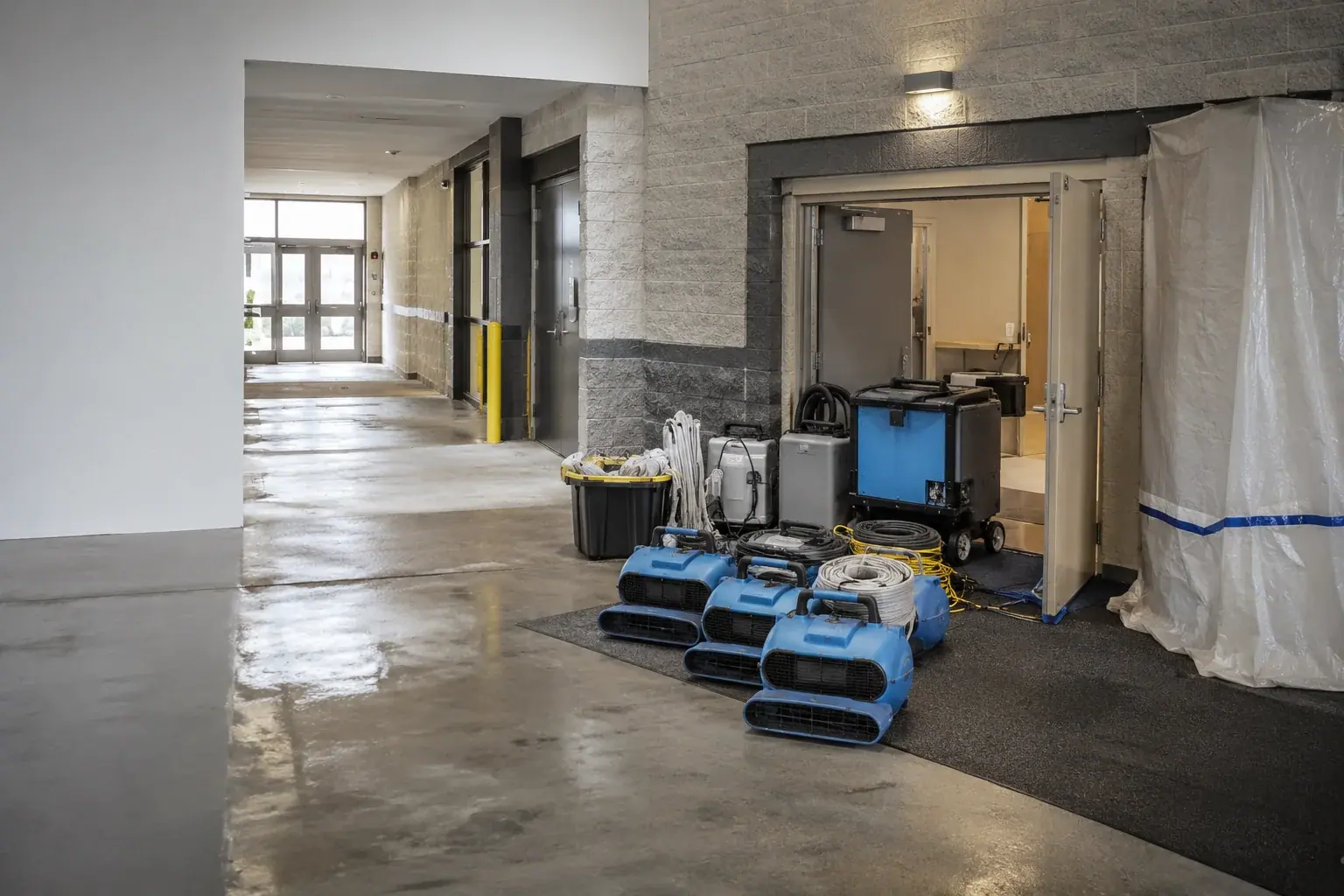
Bowmanville Restoration Services
Restoration planned for Bowmanville's historic core, growing subdivisions, creek valleys, harbour properties, and employment corridor.
Firstline Restoration provides 24/7 Restoration in Bowmanville and across the GTA. We respond within 45 minutes, mitigate the damage, and document everything for your insurer, licensed, insured, and WSIB-covered.
Request Help in Bowmanville
Calling is fastest for active emergencies. 45-min emergency response · free assessment · we work directly with your insurance.
Tell us what happened in Bowmanville
Calling is fastest for active emergencies. 45-min emergency response · free assessment · we work directly with your insurance.
Bowmanville Damage Records That Continue Into Repair
The emergency file connects source findings, affected materials, drying or cleaning records, contents decisions, insurer communication, and rebuilding.
Restoration for Bowmanville, Not a Clarington-Wide Substitute
Bowmanville is a specific urban community inside Clarington, with its own downtown, creek valleys, harbour, hospital, industrial history, and expanding neighbourhoods.
A King Street commercial loss can involve nineteenth-century brick, apartments above retail, and a narrow service lane. Brookhill and Soper Hills contain newer detached and attached construction. Port Darlington faces Lake Ontario wind, coastal wetland grades, and shoreline access. The former Goodyear lands present a large brownfield and industrial context south of downtown. Firstline identifies which Bowmanville setting is involved before selecting a response. Courtice, Newcastle, Orono, and the wider rural municipality are not used as interchangeable local colour.

response time

What Bowmanville Restoration Services Cover
Firstline can provide emergency pumping, structural drying, sewage removal, temporary roof or opening protection, soot and smoke cleaning, mould remediation, contents handling, controlled demolition, odour work, and reconstruction. The property mix includes heritage houses, postwar subdivisions, townhouses, low-rise apartments, taller mixed-use projects, healthcare space, warehouses, retail, and manufacturing.
Each loss is organized by its actual source and assembly. When a recent townhouse supply pipe fails, the scope differs from runoff entering an old fieldstone basement, and a sprinkler discharge in a distribution building is not managed as an enlarged residential leak.
Bowmanville and Soper Creeks Shape the Urban Area
Bowmanville Creek and Soper Creek run through the community before reaching Lake Ontario through a provincially significant coastal wetland complex. Soper Creek crosses the north and follows the urban area's eastern side. These valleys create flood and erosion constraints, green corridors, bridge crossings, and local low points beside otherwise developed streets. An April 2026 event closed the pedestrian tunnel below Bowmanville Avenue between Rosalynne Avenue and Alonna Street because of flooding. Firstline checks whether water came from a building system, surface flow, creek condition, groundwater, or sanitary source, then follows the path through wall bases, subfloors, finished basements, storage, and rooms below grade.

Historic Downtown and Beech Avenue Need Material-Specific Work
Bowmanville's centre retains brick commercial blocks, old houses, plaster, timber floors, masonry foundations, and repeated additions. Beech Avenue is a designated heritage conservation district, while the municipal plan recognizes the historic downtown and Old Bowmanville areas north and south of it as cultural landscapes. Fire in the downtown is a demonstrated risk. The 2008 Andrew Block fire destroyed two significant nineteenth-century buildings that were later reconstructed in a compatible form. Firstline records masonry, trim, windows, floor structure, and concealed smoke or water pathways before removal. Emergency safety comes first, but a hurried broad demolition can make accurate repair harder.
Newer buildings outside the core use different membranes, engineered components, and finish systems. Their repair path can move faster only after the damage boundary is verified.


Port Darlington Adds Shoreline and Marsh Conditions
Bowmanville Harbour, Bowmanville Marsh, Westside Marshes, and the Lake Ontario edge form a southern property context unlike inland subdivisions. Record lake levels in 2017 and 2019 reduced marsh storage and slowed river outlets, increasing the potential for backwater conditions and landside flooding on low barrier areas.
Wind and wave action can also damage roofs, siding, doors, and shoreline structures. Firstline separates direct storm openings, surface water, sewer contamination, and interior plumbing failures in the record. Equipment and waste routes are staged around soft ground, narrow waterfront access, and public trails without assuming that every Port Darlington property has the same elevation or exposure.

Fire and Environmental Questions at Industrial Sites
The former Goodyear plant operated for nearly a century before closing in 2016. Its 15.5-hectare site remains subject to environmental, demolition, and redevelopment controls, and a large fire occurred in a vacant structure in October 2025. That example shows why an industrial emergency cannot be reduced to smoke cleaning.
Site authority, unknown materials, runoff, utilities, structural stability, and environmental agency involvement may all govern access. In operating facilities near Baseline Road or Highway 401, product, machinery, warehouse racking, and business interruption create different priorities. Firstline establishes a controlled work zone, records affected assets, and adds appropriate environmental or equipment specialists before disturbance extends beyond the known loss.
Stormwater Infrastructure Is Being Updated With Growth
The Hetherington Drive outlet in the Bowmanville Creek valley was built in 1972 and is being improved with filtration and flow-control features. The Eiram pond near Longworth and Mearns requires sediment removal, inlet repair, erosion work, and restored outlet control. Albert and Durham streets are planned for watermain and storm-sewer upgrades. These projects do not establish a defect at every nearby address, but they show that old and new drainage systems are being adjusted as the community grows. During a building loss, Firstline documents the private source and onsite route while owners or municipal teams address the external infrastructure question. Drying a room does not replace a failed lateral, outlet, pond, or lot-grade correction.

Growing Housing Produces Attached and Vertical Losses
Bowmanville includes established rentals, townhouses, condominium communities, retirement housing, and proposals for taller mixed use near Highway 2 and the future transit area. A development at Green Road proposes two 11-storey buildings, showing that the local housing mix is becoming more vertical. Water from a roof, riser, appliance, or fire sprinkler can cross several homes and common elements. Firstline maps suites and floors, protects corridors and elevators, records access, and separates resident contents from corporation assemblies. Townhouse work considers party walls, connected roofs, garage separations, and private-road staging. Coverage responsibility can remain unresolved while the physical damage record stays consistent.

Hospital, Retail, and Civic Continuity
Lakeridge Health Bowmanville is a full-service community hospital and the home of a regional eye centre. Its planned expansion adds further clinical and mechanical complexity. Downtown municipal offices, schools, shops, restaurants, and public facilities also have occupied schedules and accessibility needs. Firstline confirms infection-control or operational authority where applicable, protects public routes, and sequences noise, dust, water, and equipment around the space's use. A retail loss on King Street may need stock triage and safe access for tenants above. A healthcare event may involve controlled departments, sensitive devices, and engineering review. Reopening decisions follow the operator's requirements as well as restoration readings.

Contents Range From Household Belongings to Production Assets
An older Bowmanville house may contain furniture, paper records, textiles, and built-in finishes, while a warehouse or plant may hold packaged stock, tools, raw material, and machinery. Firstline photographs contents in their original zone, separates unaffected property, and assigns a treatment or specialist-review route. Smoke residue, clean water, and sewage exposure cannot share one salvage standard. For industrial work, the owner identifies critical equipment and product disposition authority. For a residence, room-based pack-out records make return practical after repairs. Early organization also frees safe drying access and prevents items from being shifted repeatedly without a documented destination.

The Bowmanville Response Sequence
- Confirm the exact community and entrance. Dispatch uses the Bowmanville address, not a generic Clarington label, and notes downtown, creek, harbour, subdivision, or industrial access.
- Stabilize immediate conditions. Active water, unsafe power, smoke zones, unstable material, and weather openings are controlled where possible.
- Map spread and source. Photographs, readings, contamination class, and floor or unit labels establish the damage route.
- Protect operations and contents. Clean access, stock, equipment, common areas, and retained finishes are isolated from traffic.
- Mitigate with measured limits. Cleaning, extraction, removal, air control, and drying change as evidence develops.
- Prepare reconstruction. Heritage, environmental, code, matching, and specialist findings enter the permanent scope.
- Review and complete. Finished work and project records are checked against the original loss map.
Insurance Documentation Without Coverage Promises
Firstline records the observed source, emergency measures, affected spaces, moisture or residue findings, contents movement, removals, equipment, and repair requirements. A Bowmanville file may need to distinguish heritage masonry from modern finishes, building damage from machinery review, or several townhouse units from a common roof.
The insurer decides coverage, limits, and depreciation under the policy. Claim documents can be sent to the adjuster, and approved direct billing may be available. Deductibles and work beyond the policy remain payable by the property owner. The restoration record supports evaluation without deciding the insurance contract.
Highway 401 Access and Local Route Constraints
Toronto-area crews approach Bowmanville through the Highway 401 corridor, then use Waverley Road, Liberty Street, Highway 2, Regional Road 57, or Baseline Road. Congestion, collisions, winter weather, bridge work, and construction near the future GO corridor can change the preferred exit. Port Darlington sits south of the freeway, while Brookhill and Soper Hills extend north and east. Downtown alleys and hospital access differ from an industrial loading yard. Firstline confirms the destination side of town, safe parking, equipment route, and supply needs before arrival so a long GTA approach does not lead to repeated trips for preventable omissions.
One Bowmanville File From Emergency to Reconstruction
Damage in Bowmanville? Request Emergency Help.
Restrict access around sewage, smoke residue, unsafe building material, or electrical equipment exposed to water. Reach Bowmanville dispatch at (416) 900-3508, then provide the address, building use, and known source.
If the property has industrial hazards, hospital controls, shoreline access, or several affected units, mention that during the call so dispatch can plan the first entry.
Need restoration in Bowmanville now?
Talk to Firstline Restoration, 24/7 emergency response, insurance claim support, and full reconstruction.
Companies We've Worked With
Trusted by Leading Organizations
Firstline Restoration serves commercial, institutional, and property-management clients across the GTA.










Bowmanville Restoration Services FAQ
Is this page for all of Clarington?
No. It is written for Bowmanville. Courtice, Newcastle, Orono, and rural Clarington have separate geography and should not be treated as Bowmanville districts.
Do Bowmanville and Soper creeks affect restoration?
They shape valleys, flood and erosion areas, bridges, wetlands, and local grades. An assessment still identifies the specific source rather than assuming every nearby loss came from a creek.
Can you work in the historic downtown?
Yes. The scope records old masonry, plaster, timber, storefronts, upper units, and heritage context before selective removal and rebuilding.
Do you handle apartments and townhouses?
Yes. Unit, common-element, corridor, roof, party-wall, and contents records are separated for managers, residents, and insurers.
Can Firstline restore an industrial property?
Firstline handles building restoration and coordinates appropriate specialists for machinery, environmental materials, product disposition, or process systems outside the ordinary scope.
Will you deal with my insurer?
The team documents the loss and can communicate with the adjuster or use approved direct billing. Coverage belongs to the policy, and the owner pays the deductible.
What should I report during the first call?
Give the Bowmanville address, property type, source if known, affected levels, occupant risks, and any creek, harbour, industrial, or shared-building access issue.
Request Bowmanville Restoration Services
Call Firstline 24/7/365 for emergency stabilization, cleanup, documentation, and repair.
Request Help Now
Calling is fastest for active emergencies. 45-min emergency response · free assessment · we work directly with your insurance.
Restoration Near Bowmanville
View all service areas →Firstline Restoration provides 24/7 emergency response for restoration across Toronto and surrounding Ontario communities.