
Burst Pipe? Do This Before the Restoration Crew Arrives
Call Firstline 24/7 at (416) 900-3508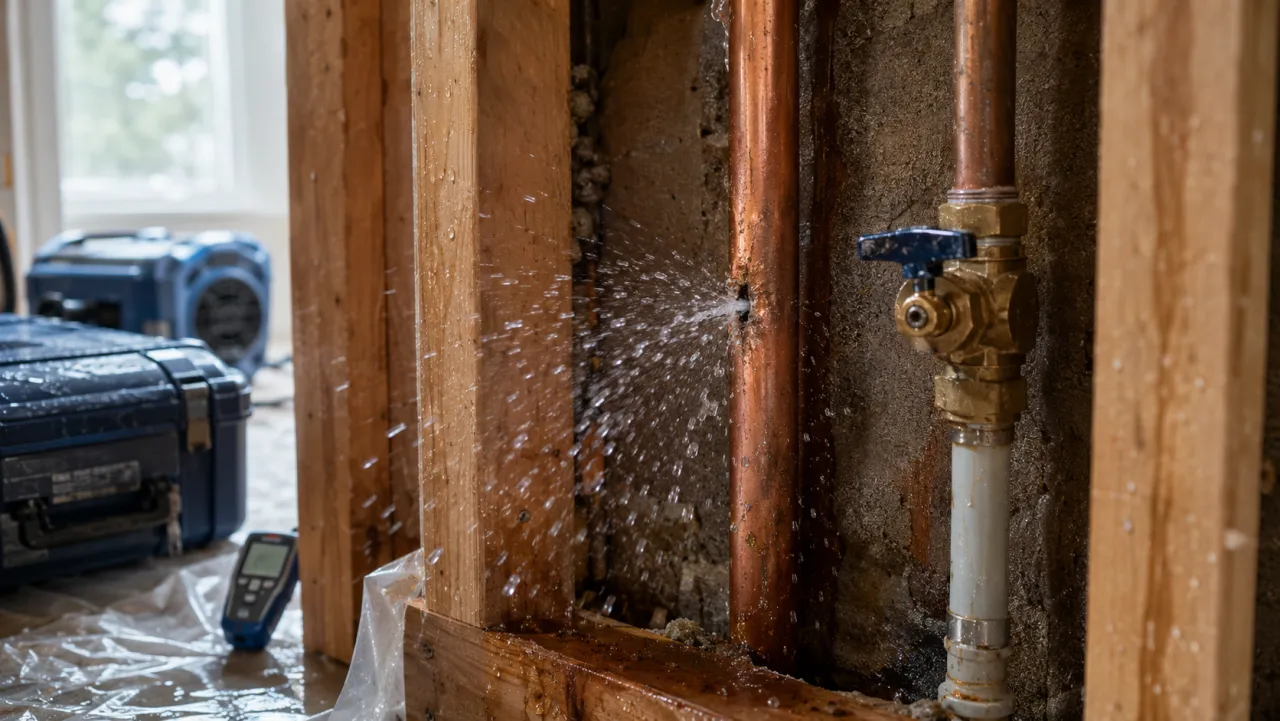
A burst pipe can release water at an alarming rate. Even a small crack can put out hundreds of litres an hour, soaking ceilings, walls, flooring, and everything you own. When it happens, the minutes between discovering the leak and getting professional help on site are critical. Knowing exactly what to do when a pipe bursts can be the difference between a quick repair and a major renovation.
This is the step-by-step plan we give GTA homeowners over the phone when they call us in a panic. Work through it in order, stay safe, and you will dramatically reduce the damage before the restoration crew arrives.
First, Take a Breath and Move Fast
A burst pipe feels chaotic, but the response is simple and the order matters: stop the water, kill the power if needed, drain the system, document the damage, and start mitigating. Let's go through each one.
Step 1: Shut Off Your Main Water Valve
This is the single most important thing you can do, and it should happen within seconds of discovering the leak. Until the water is off, everything else is secondary.
Where to Find the Main Shutoff in a GTA Home
In most Greater Toronto Area homes, the main water shutoff valve is in the basement, on the foundation wall where the municipal water line enters the house, usually near the water meter. It will be a lever or a round handle on the main pipe.
- Round handle: turn it fully clockwise (right) until it stops.
- Lever handle: turn it a quarter turn so it sits across (perpendicular to) the pipe.
If the leak is at a single fixture, like a toilet or a sink, you may be able to use that fixture's own shutoff valve instead and keep water running elsewhere. But if you are not sure, shut off the main. It is faster and safer to stop all water than to hunt for the exact source while your home floods.
Find your main valve before an emergency. Right now, while everything is calm, walk down and locate yours so you are not searching for it in a crisis.
Step 2: Cut the Power if Water Is Near Electrical
If water is dripping near outlets, light fixtures, your electrical panel, or has reached the floor where appliances sit, electricity becomes a serious hazard. If you can reach your breaker panel without standing in water, shut off the affected circuits or the main breaker. If the panel is wet or you would have to stand in water to reach it, stay back and call an electrician or your utility. Never gamble with water and electricity.
Step 3: Drain the Remaining Water From Your Pipes
Even after you close the main valve, there is still water sitting in your pipes that will keep draining out of the break by gravity. Get it out of the system quickly.
- Open cold water taps throughout the house, starting with the lowest one (usually a basement or ground-floor sink) to let the lines drain down and away from the break.
- Flush all the toilets to clear the tanks.
- Open hot water taps too, then if the burst is on a hot line, shut off your water heater to be safe.
- If the pipe froze and burst, do not try to thaw the broken section yourself. Thawing a cracked pipe just releases more water. Keep it drained and let a professional handle the repair.
Step 4: Contain and Catch the Water
With the supply off and the lines draining, grab buckets, bins, and towels to catch active drips and soak up pooled water. Move quickly to limit how far the water spreads.
- Place buckets under active drips and lay towels along the leading edge of the water.
- If water is pooling on an upper floor, a small drain hole poked in a sagging, water-filled ceiling bulge (with a bucket underneath) can prevent a larger, messier collapse. Only do this if it is safe to reach.
- Get a wet/dry shop vacuum going on standing water if you have one.
Step 5: Document the Damage for Insurance
Before you start hauling out wet belongings, document everything. A burst pipe is a sudden, accidental event, which is the type of water damage most commonly covered by Ontario home insurance policies, so good documentation helps your claim go smoothly.
- Photograph and video the burst pipe, the water, and every damaged item and surface, with wide and close-up shots.
- Note the date, time, and cause while it is fresh.
- List damaged contents with approximate values and locate receipts where possible.
- Keep damaged items until your adjuster approves disposal.
- Call your insurer or broker to open a claim as soon as the immediate emergency is under control.
Step 6: Start Drying and Protecting Your Belongings
Once the water is stopped and documented, your insurer expects reasonable steps to limit further damage. Move valuables, electronics, and furniture to a dry area. Lift furniture off wet carpet and place foil or blocks under the legs. Open windows if it is dry outside, and run fans and a dehumidifier. The faster you get air moving, the less likely you are to see mould, which can begin within 24 to 48 hours.
That said, a shop vac and a couple of fans only handle the surface. Water from a burst pipe travels into wall cavities, under flooring, and across ceilings where you cannot see or reach it. That is exactly what professional equipment and moisture meters are for.
Burst Pipe Flooding Your Home? Call Now.
Firstline Restoration has handled burst pipe emergencies across the Greater Toronto Area since 2006. Licensed, insured, and WSIB compliant, with a 5-star Google rating and a 45-minute emergency response. Call us and we will guide you through shutting off the water and protecting your home until our crew is on site.
Call (416) 900-3508 for 24/7 emergency burst pipe damage restoration.
Why Pipes Burst in the GTA, and How the Frozen Ones Happen
Many of the worst burst pipe calls we get in the Greater Toronto Area come during cold snaps. When water inside a pipe freezes, it expands, and the pressure that builds between the ice blockage and a closed faucet is what actually splits the pipe, often somewhere away from the frozen section itself. The damage frequently appears only when things thaw and water starts flowing through the crack.
Pipes in unheated or poorly insulated spaces, exterior walls, attics, crawl spaces, and garages are the most vulnerable. To reduce your risk this winter:
- Wrap exposed pipes in unheated areas with foam pipe insulation or heat tape.
- On extreme-cold nights, let a faucet drip slightly to relieve pressure and keep water moving.
- Keep your thermostat at a safe minimum, even when you are away, and never let the home drop too low.
- Disconnect and drain garden hoses and shut off outdoor spigots before winter.
- Seal air leaks near pipes around windows, doors, and where lines pass through walls.
How Firstline Restoration Helps
When a pipe bursts, we respond fast and dry your home properly so there are no nasty surprises down the road. Our team handles complete burst pipe damage restoration, full water damage restoration, and basement flood restoration when the water has worked its way downstairs. We extract the water, dry the structure to a verified standard, and coordinate directly with your insurance adjuster from start to finish.
Frequently Asked Questions
What is the very first thing to do when a pipe bursts?
Shut off your main water valve immediately. In most GTA homes it is on the basement foundation wall near the water meter. Turn a round handle fully clockwise or a lever a quarter turn across the pipe. Stopping the water is the single biggest thing you can do to limit damage.
Should I try to thaw a frozen pipe that has already burst?
No. Thawing a cracked or burst pipe simply lets more water flood out. Keep the main valve off, drain the lines by opening taps, and call a licensed plumber and restoration crew. Only unburst, still-frozen pipes should be carefully thawed, and even then with caution.
Does home insurance cover burst pipe damage in Ontario?
Usually, yes, more so than flooding from outside. A burst pipe is typically considered sudden and accidental damage, which standard Ontario policies often cover. Coverage can vary, so document everything and contact your insurer or broker promptly to confirm and open your claim.
Water, fire, or mould emergency in the GTA?
45-minute emergency response. Documented, insurance-ready work. We answer 24/7/365.
Call (416) 900-3508